
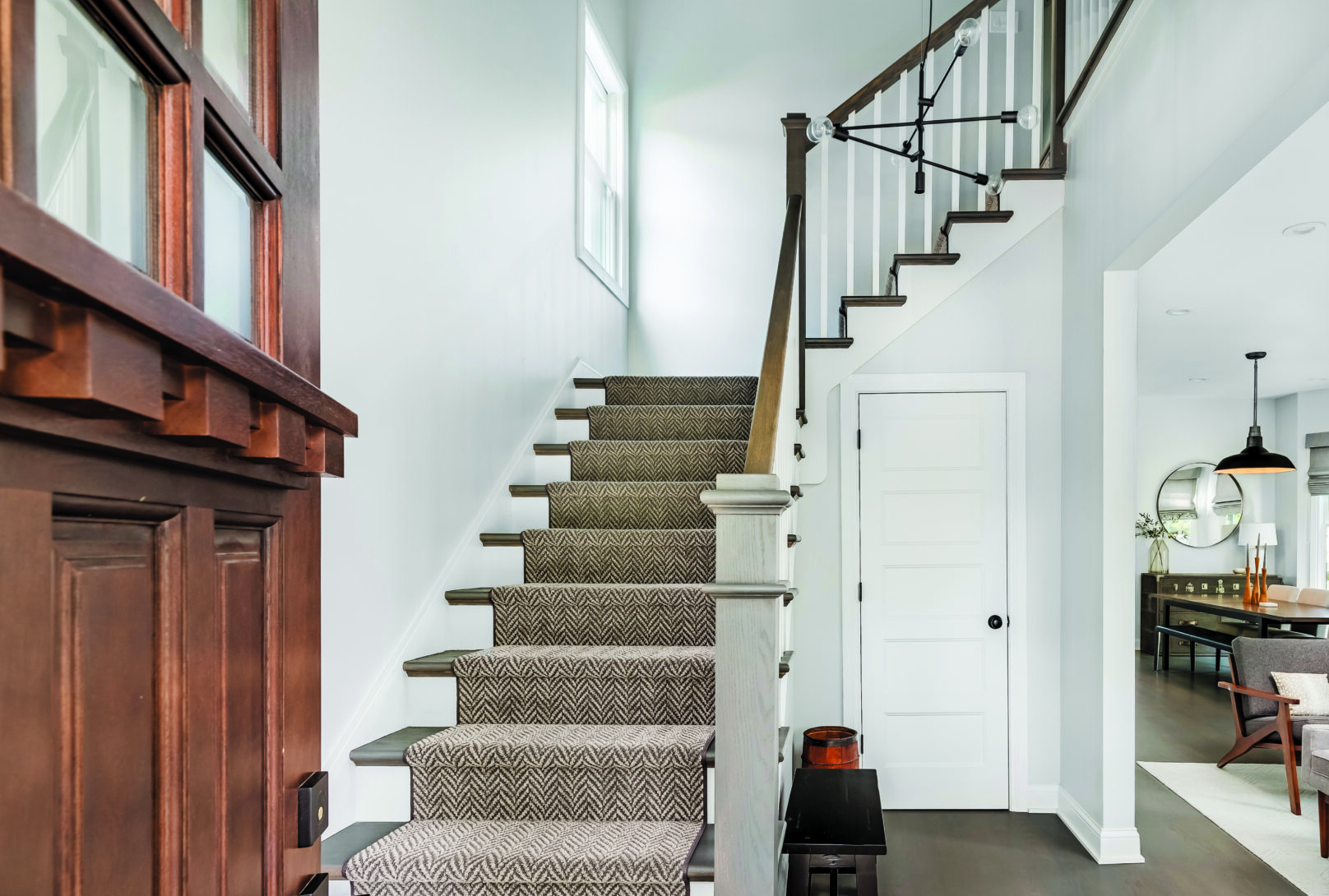
Staircase trends move slower than kitchen and bath trends. A kitchen can be re-tiled and re-painted every few years; a staircase is a more permanent commitment, so the trends that take hold tend to stick around longer. Here's what we're seeing in stair design right now — and a quick honest take on which trends are worth incorporating into a long-term build and which ones are likely to look dated in a few years.
1. Mixed materials. The strongest current trend in stair design is mixing materials within a single staircase. The most common combination is wood treads with metal balusters — typically satin-black iron, square iron, or thin cable — and a wood handrail on top. The contrast between warm stained wood and cool darker metal gives the staircase visual energy without relying on heavy ornamentation. This one has been gaining ground for over a decade and shows no sign of fading. Worth incorporating.
2. Square everything. Square newels, square iron balusters, square-edge handrails. The clean rectilinear look continues to dominate over turned and rounded counterparts in new builds and remodels alike. Square parts also tend to be easier to install (no rotation to worry about), which matters when you're hiring out the work. Worth incorporating, especially if your home's existing trim runs square.
3. Wider, deeper treads. Modern builds are favoring slightly deeper treads — 11 to 12 inches rather than the traditional 10 — which gives a more comfortable descent and reads more contemporary. Combined with slightly shorter risers, the overall feel is a less steep, more processional climb. This requires planning at the framing stage, so it's mainly relevant for new construction or full rebuilds. Worth incorporating if you have the room.
4. Open risers. Where building code allows, open-riser staircases — where you can see through the gap between treads — give a much lighter, more contemporary feel. Pair them with steel stringers and a modern tread material and the staircase becomes a sculptural element. Code restrictions apply (most residential code limits the open space between treads for safety), so check before designing. Worth incorporating in the right setting, but be honest that the more dramatic open-riser looks date faster than traditional closed risers.
5. Integrated lighting. Recessed LED strips along the underside of the handrail, on the underside of each tread overhang, or recessed into the wall along the staircase — lighting is no longer reserved for high-end custom builds. Off-the-shelf low-voltage LED strips have made this accessible to mainstream projects. Worth incorporating; it's both functional (safer descent at night) and visual (the staircase glows softly without an overhead light).
6. Painted risers under stained treads. White-painted risers under warm stained treads. It's clean, it's high-contrast, it shows off the tread wood, and it's been the dominant tread/riser combination for years. Some designers are starting to push back toward fully stained risers for a more substantial, traditional feel — so this trend may soften — but for now it's still the safe, broadly appealing choice.
7. Statement handrails. A growing trend in higher-end builds is treating the handrail as a sculptural element — a thicker, more substantial profile in a contrasting wood species or finish. This one is more polarizing. Done well, it anchors the staircase. Done poorly, it overwhelms the room. Be honest about whether your staircase has the scale to carry it.
Trends to be cautious about. A few looks that are heavily featured in design press right now but historically don't age as well: ultra-thin cable railing in residential settings (looks great today; reads dated in 10 years), unusually colored stains or paints on the staircase itself (pink, sage, deep navy), and oversized barnwood handrails that fight with the rest of the home's millwork. None of these are wrong, but they're more likely to need updating sooner than a square-newel, iron-baluster, stained-tread setup.
The safe long-term play. If you're building or remodeling and want a staircase that still looks current 15 years from now, the formula has barely changed: square newels in a paint or stain that matches your trim, iron or square wood balusters, a clean handrail profile, stained hardwood treads, and painted risers. Layer on lighting and you have a staircase that ages with the home rather than against it.
Want to see how a trend plays out on your actual staircase? Use Stair Studio™ to preview combinations before you commit.
Have a project in mind? Visit The Stair Studio™ or get in touch.