
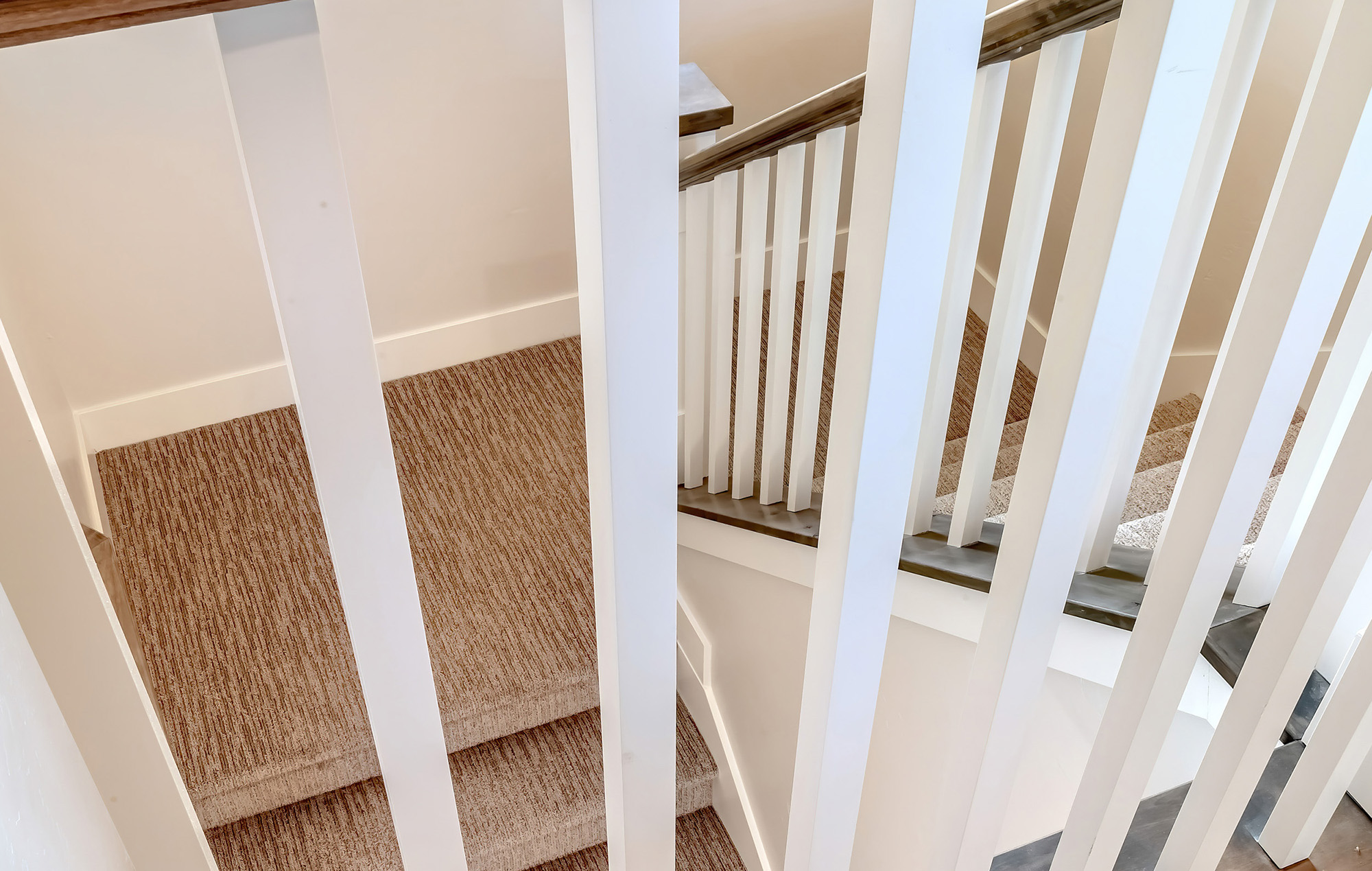
If you've ever shopped for stair parts — either online or at the Pro desk of your local home center — you've probably noticed something confusing. The same vertical piece between your tread and handrail gets called three different things depending on who's talking: spindle, baluster, or picket. The terms overlap, but they aren't perfect synonyms, and understanding the difference saves real time when you're ordering parts.
Baluster. The umbrella term. A baluster is any vertical member that runs between a stair tread (or floor) and a handrail, and helps support the rail. Wood, iron, square, round, turned, or plain — if it's standing vertical under your handrail, it's a baluster. The full row of balusters, taken together, is called the balustrade.
If you remember only one term, make it this one. "Baluster" works in every conversation, in every catalog, with every supplier in the U.S. It's the safe, unambiguous word.
Spindle. The traditional, more specific term. A spindle technically refers to a turned wood baluster — one that's been shaped on a lathe with decorative profiles, bands, beads, and tapers. The word comes from the textile industry (a spinning wheel spindle has the same lathed shape), and it carried over to stair parts because the manufacturing process was identical: a square blank, mounted on a lathe, and turned to a profile.
So all spindles are balusters, but not all balusters are spindles. A satin-black iron baluster is not a spindle. A square wood baluster is not a spindle. A pin-top turned poplar baluster on a Victorian staircase absolutely is.
In practice, builders and homeowners often use "spindle" loosely to mean any baluster. That's fine in conversation, but it can cause problems when you're ordering — a supplier reading the word literally might pull turned wood when you actually wanted square iron.
Picket. Borrowed from fencing. A picket is the term most often used for plain square balusters, especially in the context of porches, decks, and exterior railing. You'll occasionally hear it applied to square iron balusters indoors as well, particularly in regions where deck building and stair building share a vocabulary. It's less common in formal stair-parts catalogs, but worth knowing if you read building plans.
Newel, handrail, tread — quick refresher. While we're on terminology:
Newel. The large structural post at the bottom, top, and any turn or landing of the staircase. The newel anchors the handrail and the balusters. Square newels, paneled newels, and turned newels are the three most common families.
Handrail. The continuous horizontal piece you hold while climbing. It connects newel to newel and sits on top of the balusters.
Tread. The horizontal surface you actually step on.
Riser. The vertical face between treads.
Stringer. The diagonal structural board on the side of the staircase that the treads and risers attach to.
Why this matters when you're ordering. If you call a supplier and ask for "forty spindles," you might get forty turned wood balusters when what you actually wanted was forty plain square iron balusters. Defaulting to the word "baluster" — and specifying the material ("iron" / "wood"), the profile ("square" / "turned"), and the dimensions — gets you the right product the first time.
Have a project coming up? Browse Evermark balusters at The Home Depot, or reach out to our stair experts for help putting together a parts list.
Have a project in mind? Visit The Stair Studio™ or get in touch.