
A staircase is unusual among home improvement projects. It's a structural feature, a daily-use product, and a major visual element all at once. You touch the handrail every time you go up or down. You see the newels and balusters from every adjacent room. And the whole assembly has to stay safe and tight for the life of the home. The manufacturer behind the parts matters as much as the design you choose.
Here's what separates a quality stair parts manufacturer from a low-cost importer — and what to look for before you buy.
1. Consistent wood species and grade. Wood is a natural material, but a good manufacturer controls for variation. If you order a dozen oak balusters, they should all be the same species (red oak vs. white oak matters), the same grade, and reasonably close in grain pattern and color. Random color variation across newels and treads is the single most common sign of mixed lots and poor sorting at the factory. It shows up at install time when you realize the treads going up the staircase visibly stripe between light and dark boards.
2. True, consistent dimensions. Stair parts have to fit together. A baluster that's 1/16" too long won't seat into the handrail correctly; a tread that's 1/16" out of square telegraphs every gap along the wall. Cheap stair parts often vary noticeably across a batch, which makes a clean install nearly impossible. A quality manufacturer holds tighter tolerances and rejects parts that don't meet them — which means more cost up front, but a faster, cleaner install on site.
3. Profile sharpness and finish quality. Run your hand along the profile of a turned newel or a beaded handrail. Quality parts have crisp, well-defined profiles with no fuzziness, no torn grain, and no sanding marks running across the profile. Lower-quality parts often look right from across the room but feel rough up close — a sign the manufacturer is skipping sanding stages to save cost.
4. Engineering and code compliance. Stair parts have to meet building code: minimum baluster spacing of 4 inches, handrail height requirements, baluster strength requirements. A manufacturer who designs to code spec — and tests against it — gives you parts you can install with confidence. Imported parts of unknown origin sometimes don't meet U.S. residential code, which becomes a problem at inspection.
5. U.S. manufacturing where possible. Domestic manufacturing tightens the supply chain in ways that show up directly in product quality. The factory and the engineering team are in the same time zone. Quality issues can be caught and corrected in days, not months. If a tread arrives damaged, a replacement can ship overnight. Warranty resolution is straightforward. None of those things are guaranteed with offshore supply chains.
6. A real warranty and a real support team. A quality manufacturer stands behind the product. That means a documented warranty, a phone number that gets answered by a person who knows the product, and a process for dealing with defects without making the homeowner jump through hoops. Ask before you buy.
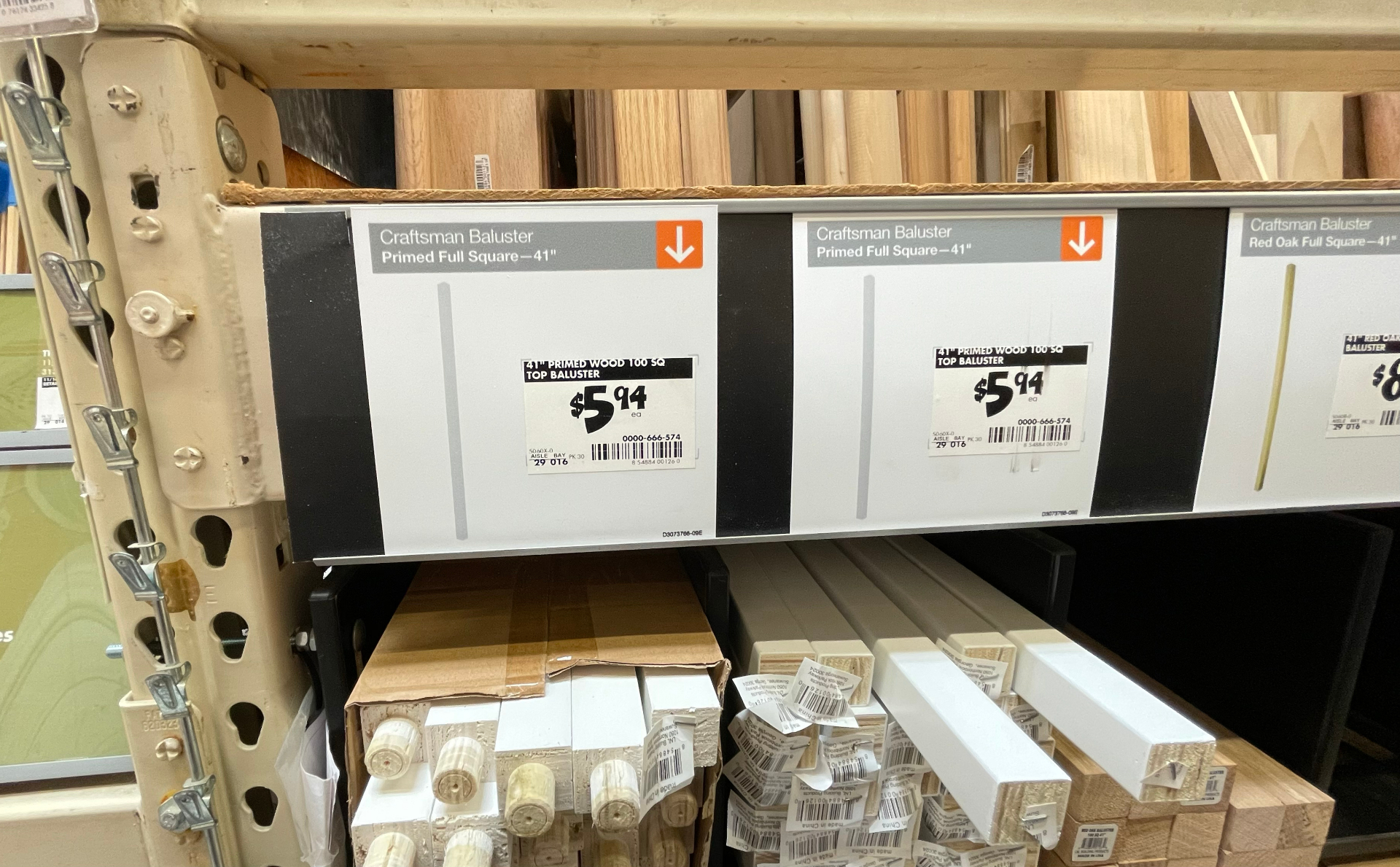
Why Evermark. We've been manufacturing stair parts in the United States for more than 30 years, and we operate our own factories rather than relying on contract manufacturing. That control over the production line is the reason we can hold tight tolerances, maintain consistent finishes, and ship parts that fit together the first time. It's also why The Home Depot chose Evermark as its exclusive in-store stair parts brand — they wanted a single, dependable source they could put on shelves in every store in the country.
Quality parts make for faster installs, cleaner finishes, and a staircase that holds up for decades. It's worth choosing a manufacturer that takes that seriously.
Have a project in mind? Visit The Stair Studio™ or get in touch.