
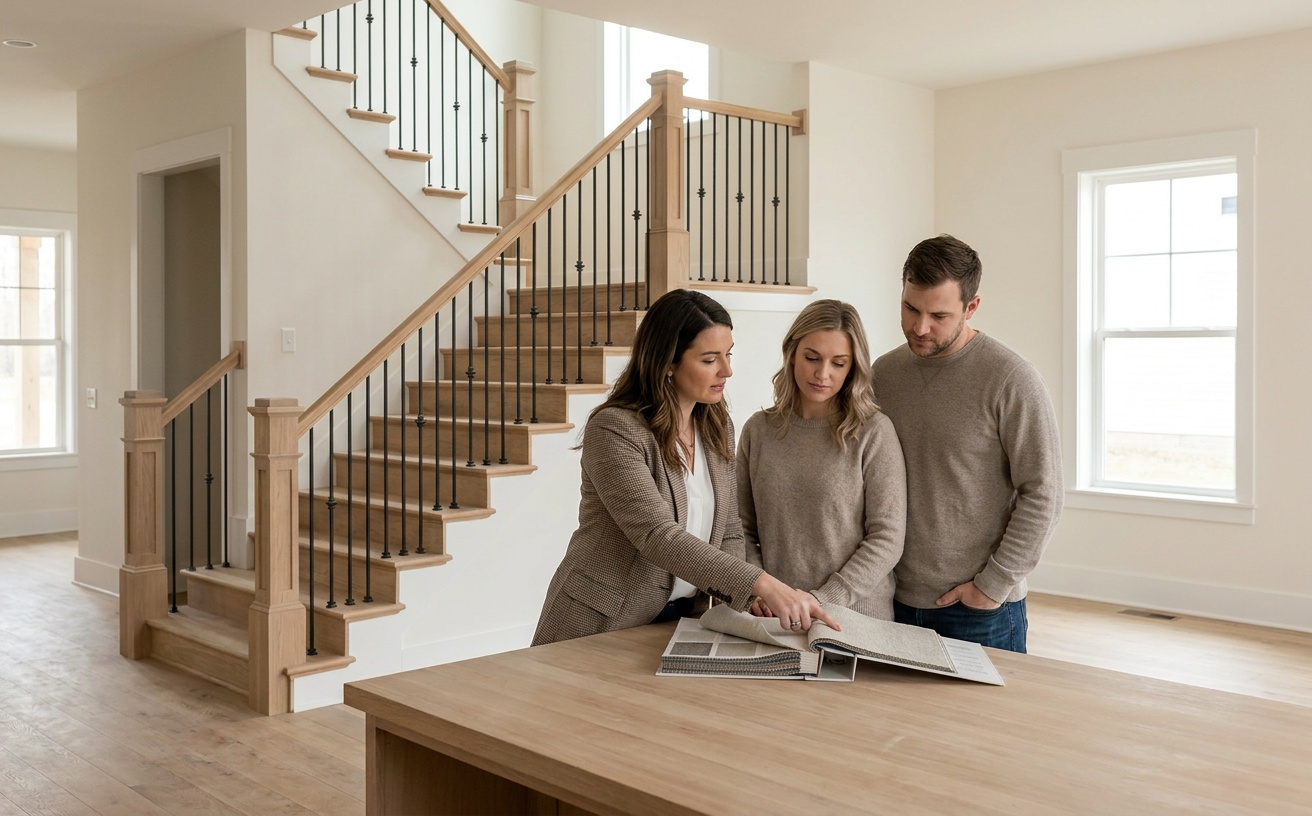
Your staircase is one of the most visible architectural features in your home. It anchors the entryway, sets the tone for adjacent rooms, and quietly shapes how every other finish — flooring, trim, wall color, even furniture — reads when you walk in. Choosing a style for your stairs is really choosing a style for the whole first impression of your home.
The good news: staircase design tends to fall into a handful of recognizable categories, and once you can name them, picking parts becomes much easier. Here are five of the most common styles you'll see in homes today, and what makes each one distinct.
1. Traditional. Traditional staircases lean on ornate turned newels, rounded handrails, and wood balusters in oak, poplar, or maple. Think rich stains, classic profiles, and timeless symmetry. Newels often feature finials and decorative collars, balusters are turned on a lathe with multiple bands and beads, and handrail profiles tend to be larger and rounder. Traditional pairs naturally with crown moulding, wainscoting, and formal furniture.
2. Modern / Contemporary. Modern staircases strip the ornamentation away. Newels are square and unembellished, balusters are typically thin satin-black iron, square iron, or cable, and the handrail is a clean square or rectangular profile. Risers are often painted bright white while treads stay stained dark — a high-contrast look that reads architectural and editorial. Open risers and steel stringers are common where local code allows.
3. Modern Farmhouse. The most-requested style of the last several years, modern farmhouse is a deliberate hybrid: traditional craftsmanship with modern restraint. Square or lightly tapered newels in white paint, simple satin-black iron balusters, warm stained treads, and white risers. The look is friendly and lived-in but still clean enough to feel current. It pairs well with shiplap, matte black hardware, and reclaimed wood accents.
4. Craftsman. Craftsman staircases feel substantial. Heavy square posts with paneled faces, a strong horizontal handrail, and balusters that are often square or rectangular rather than turned. Built-in millwork is common — bookcases, window seats, or wainscoting that wraps the stair opening. Stains tend toward warm browns and quarter-sawn oak, and the overall feel is honest, solid, and hand-built.
5. Transitional. Transitional is the flexible middle ground that designers reach for when they want broad appeal. It mixes elements from traditional and contemporary in a way that doesn't commit fully to either: square newels paired with a curved handrail, painted risers under stained treads, or iron balusters used with traditional wood newels. Because it borrows from both worlds, transitional staircases tend to feel comfortable in almost any home and age well as decor trends shift.
How to choose. Start with the rest of your house. The most successful staircases echo the trim profiles, door styles, and millwork that already exist in the home. If your baseboards and casings are simple and square, square newels and iron balusters will look intentional. If your home has heavy crown and panel-mould doors, turned wood balusters and a rounded handrail will fit the language.
If you're still narrowing it down, our Stair Studio™ lets you preview different newel, baluster, and handrail combinations against your floor and wall colors before you commit. And every part shown is stocked or available through your local The Home Depot, so the design you fall in love with is the design you can actually build.
Have a project in mind? Visit The Stair Studio™ or get in touch.